

The Museum’s on-site Archive Department has unearthed correspondence from a Mr Wilson regarding the Carter, Paterson Horse-drawn Van which we have on display here at the Museum.
The van was originally constructed by Mr Wilson’s father, Jim using Wainwright tools designed for woodwork. It helped distribute and deliver small packages around towns and cities.
The Rich History of Horse-Drawn Delivery Vans:
And how they shaped the haulage industry…
Horse-drawn vehicles such as this Carter, Paterson Van were easier to manoeuvre in restricted areas such as railway yards and factory yards. – 82 million tonnes of goods were transported along Britain’s railways in 1890. Many of these items were then collected and distributed in vans like this.

A dog accompanied each van as a deterrent against theft, guarding the parcels whilst the delivery driver was otherwise occupied.
Horse-drawn Vans were commonplace from the 1800s up until at least the 1920s.
The manufacturer of this van, Carter, Paterson & Co. Ltd. was a transport company based in London. They were a major British haulage firm, many of their early vehicles were operated by steam and petrol engines, in addition to those which were hauled by horses.

British Railways continued using Horse-drawn vehicles right up until the 1950s, when the ‘Mechanical Horse’ developed by Scammell eventually replaced nearly all of the Horse-drawn Vans.
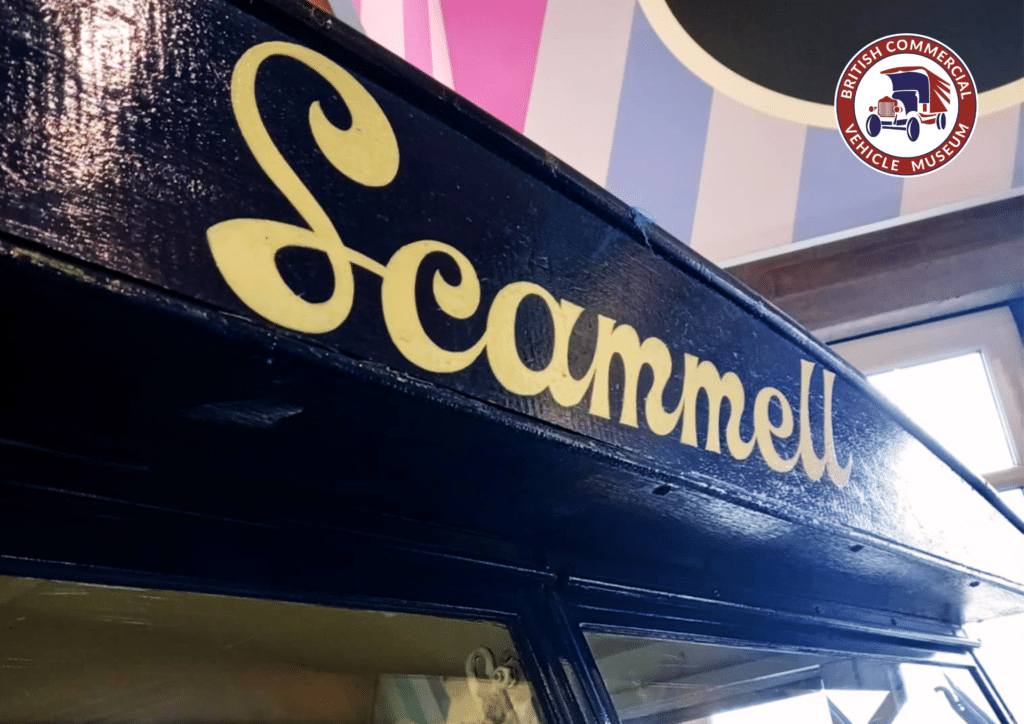
The Museum is also home to a Scammell Mechnical Horse, famed for having three wheels and renowned for its capabilities to operate efficiently in tight spaces.
Restoring Britain’s Delivery Legacy: The Remarkable History of This Carter, Paterson Van
Founded in 1948 the British Road Services (BRS) was an extensive nationalised road haulage company, which was formed following the passing of the Transport Act (1947). Like many other companies including BRS and Pickfords, Carter, Paterson amalgamated to form one larger body known as the British Transport Commission.
At the time of the merge Carter, Paterson were providing a delivery service from Macclesfield Road parcel depot.
Depot employees decided to retain the horse drawn van following its retirement, storing it in the depot’s basement as a souvenir. Once upon a time this is where the horses would have stayed.
Unfortunately, forgotten by time the van remained in the depot basement for some years. The parcel van was later rediscovered, albeit with damage to the frame, in particular the framework where the horse would have been tethered to the vehicle and much of the timber was rotten.
Mr Wilson was a coach builder, he restored the van which was is very poor condition using all of his father’s old tools. His father Jim, was retired and volunteered part-time to help his son Stanley renovate the delivery van… as a father and son project!
Originally, the Carter, Paterson logo was attached to the side of the van. Once the vehicle had been restored the Wilsons affixed a Road Line sign to the side of the vehicle.
In subsequent years, once restoration was complete, the parcel van was used annually to participate in the Lord Mayor’s Show, the oldest civic procession in the World – held in London.

The Carter, Paterson Horse-drawn Van now resides at the British Commercial Vehicle Museum, nestled between a Shand Mason Horse-Drawn Fire Appliance and a Thornycroft Steam Van!