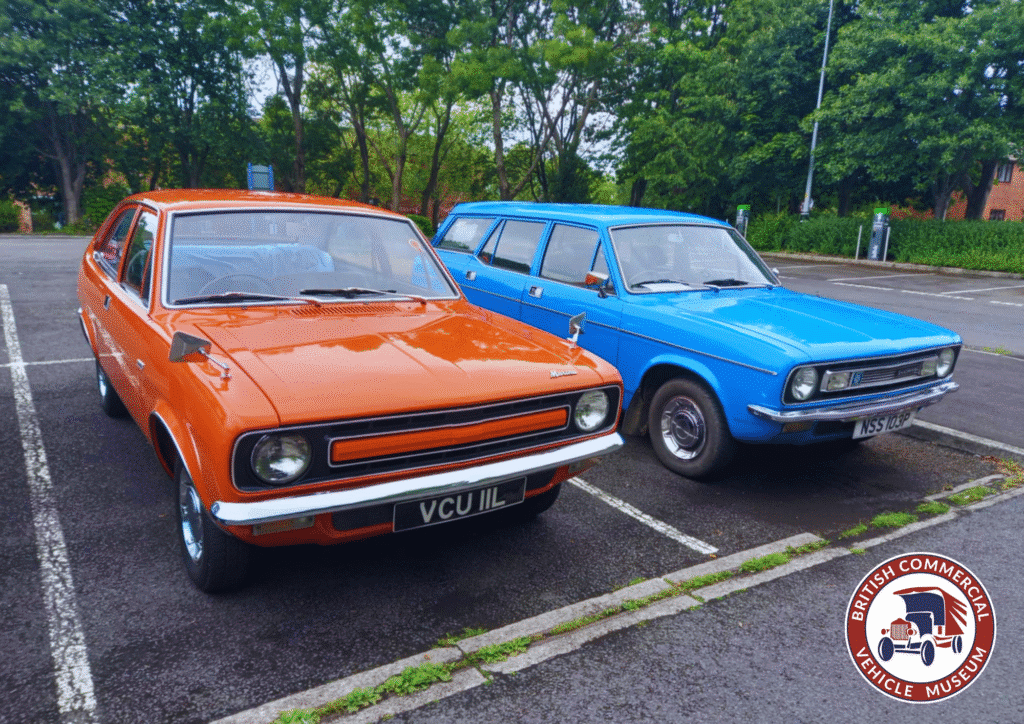
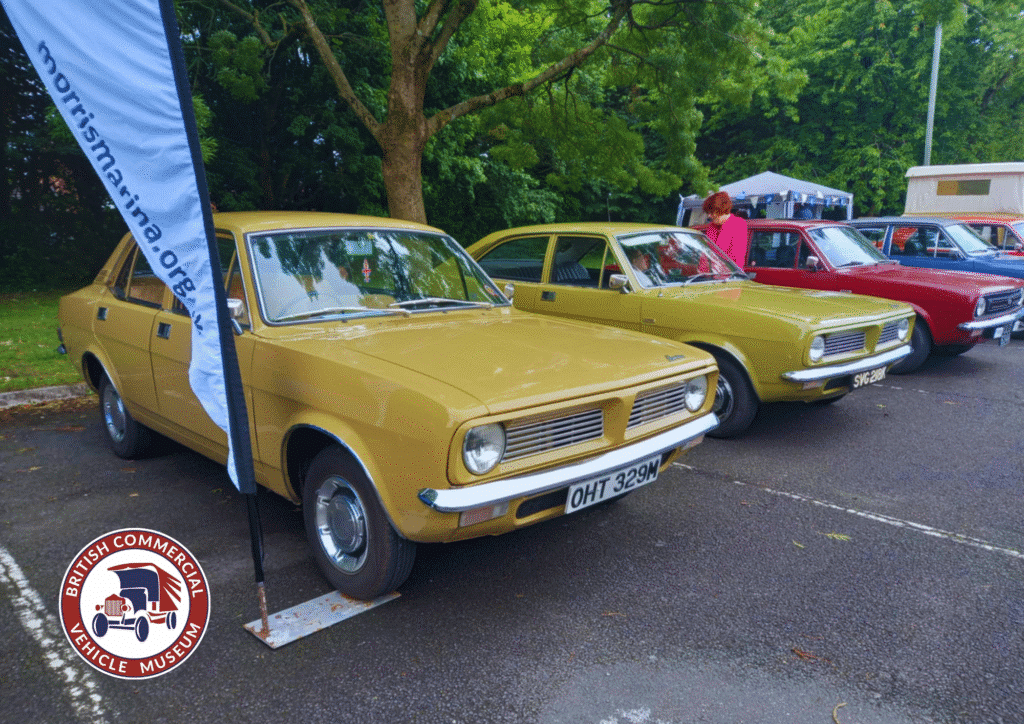
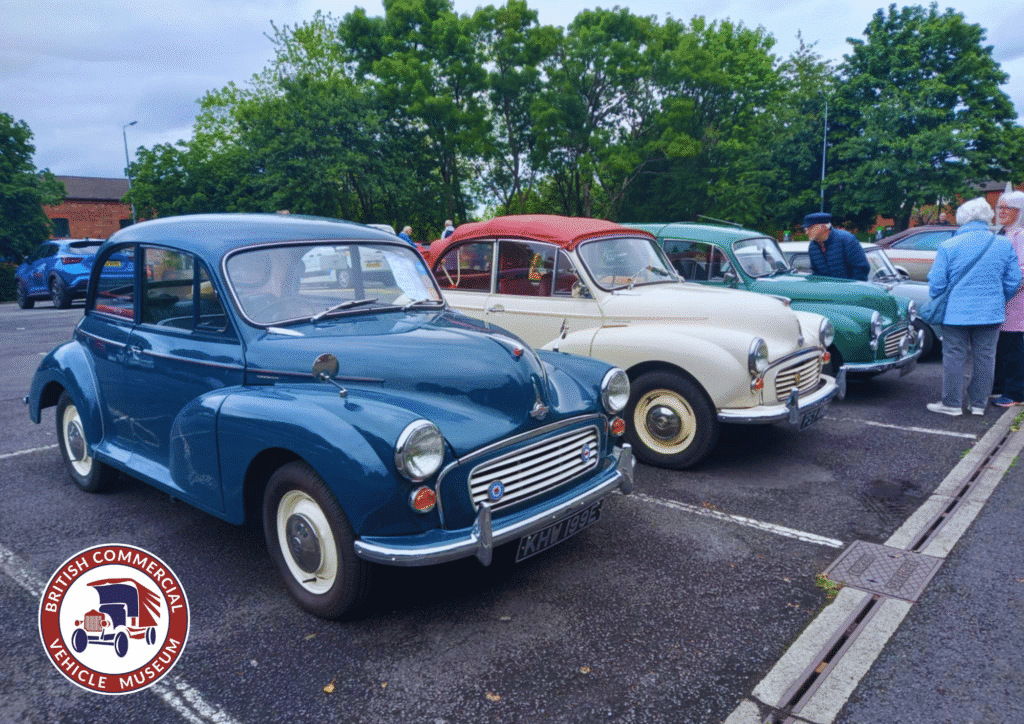
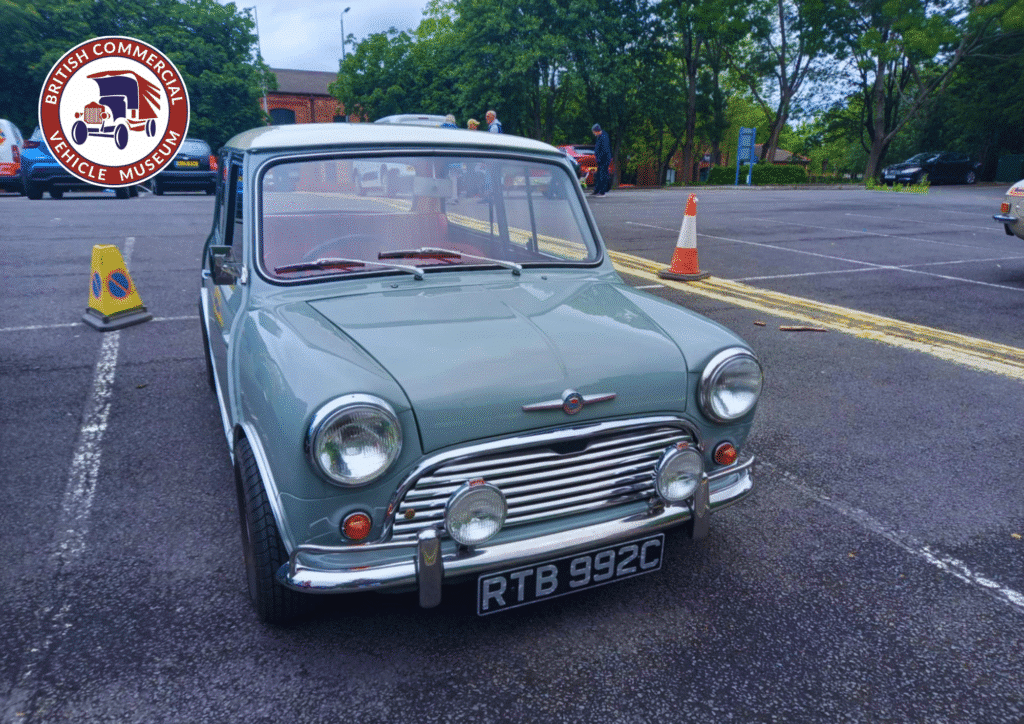
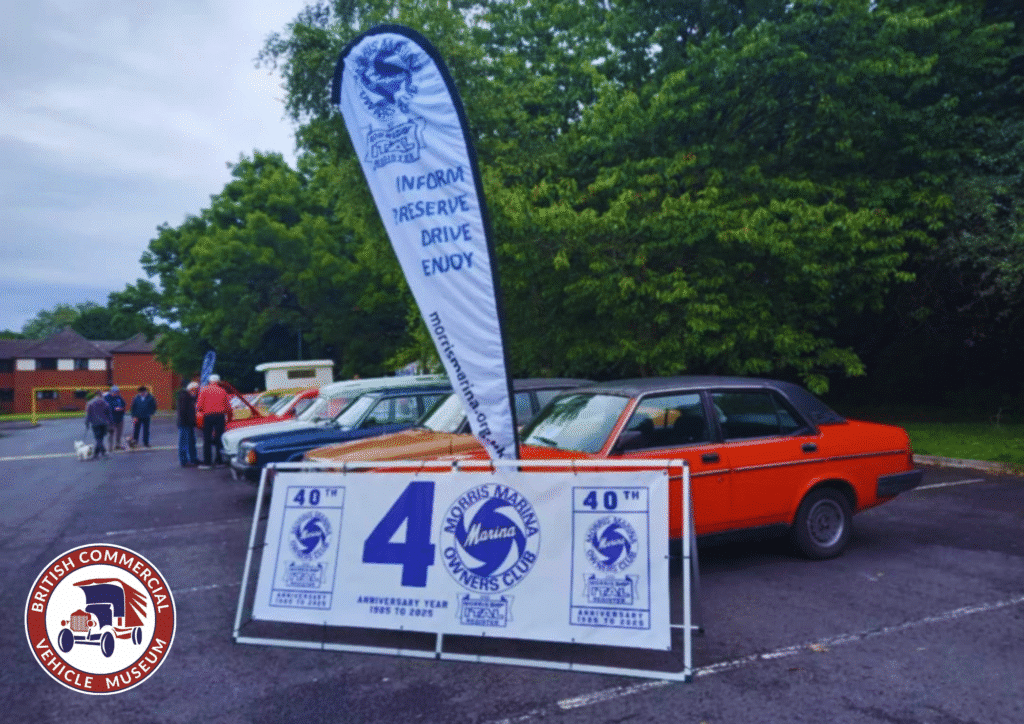
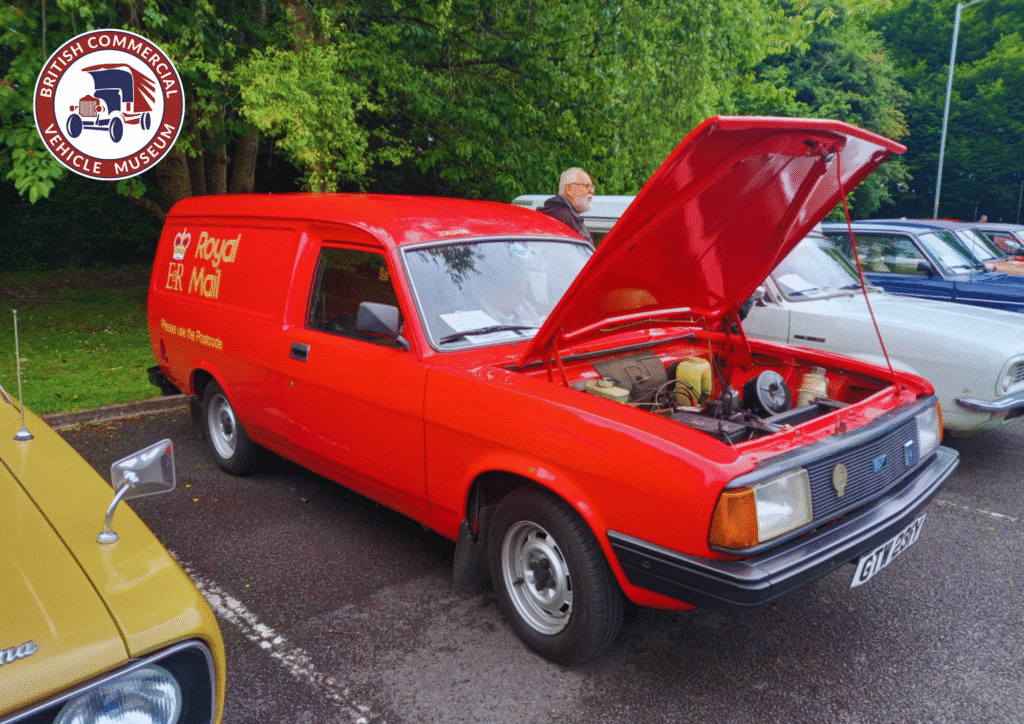
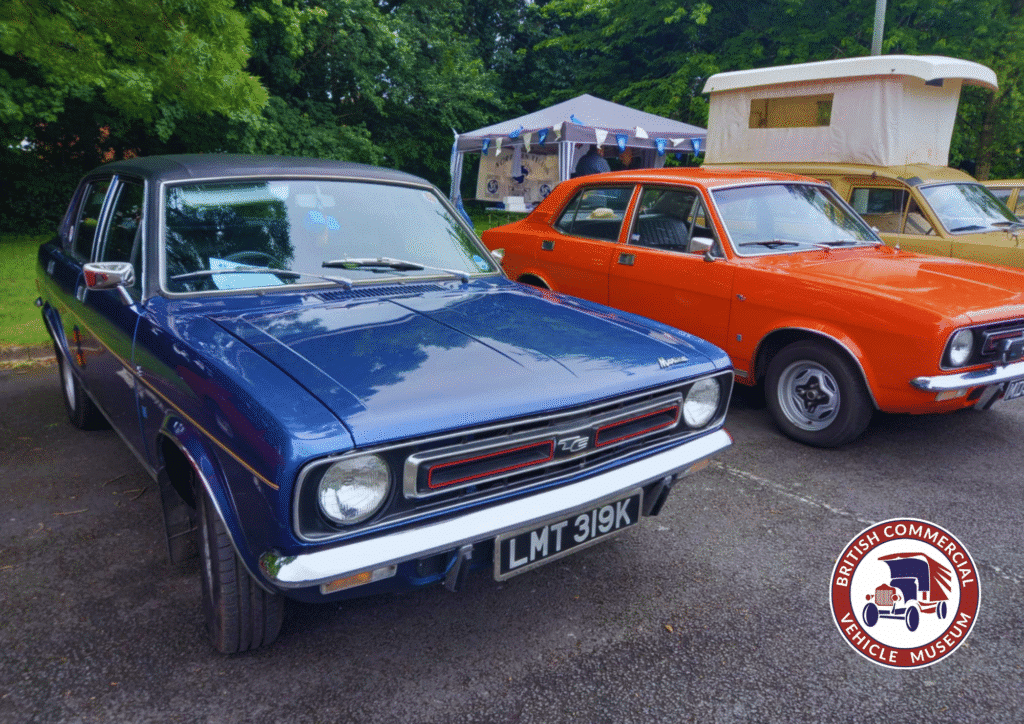
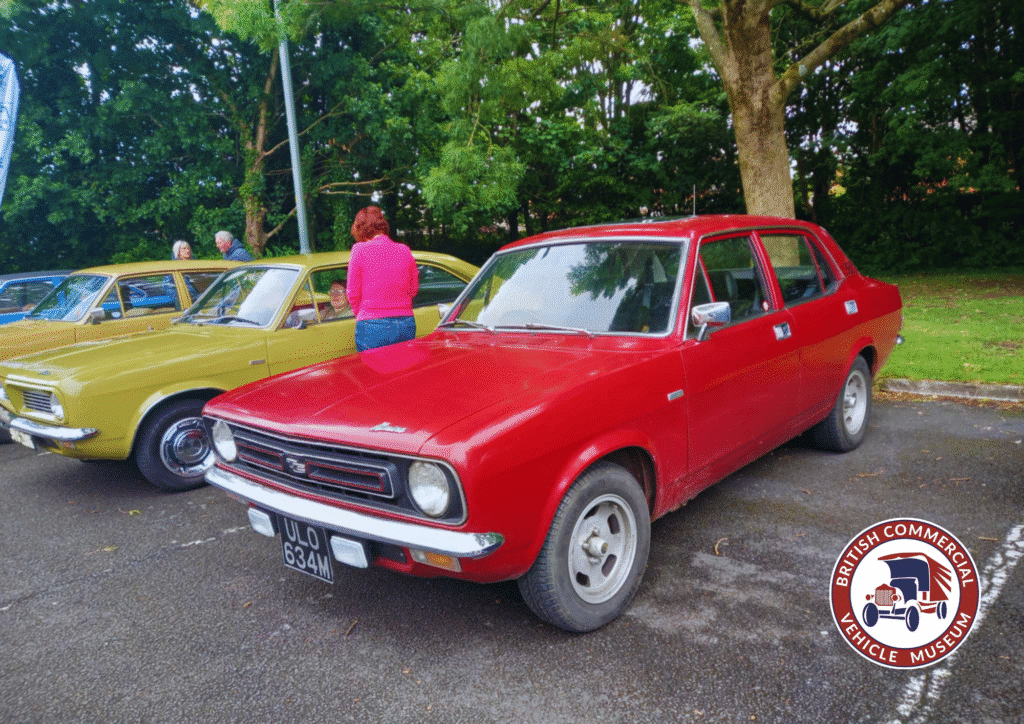
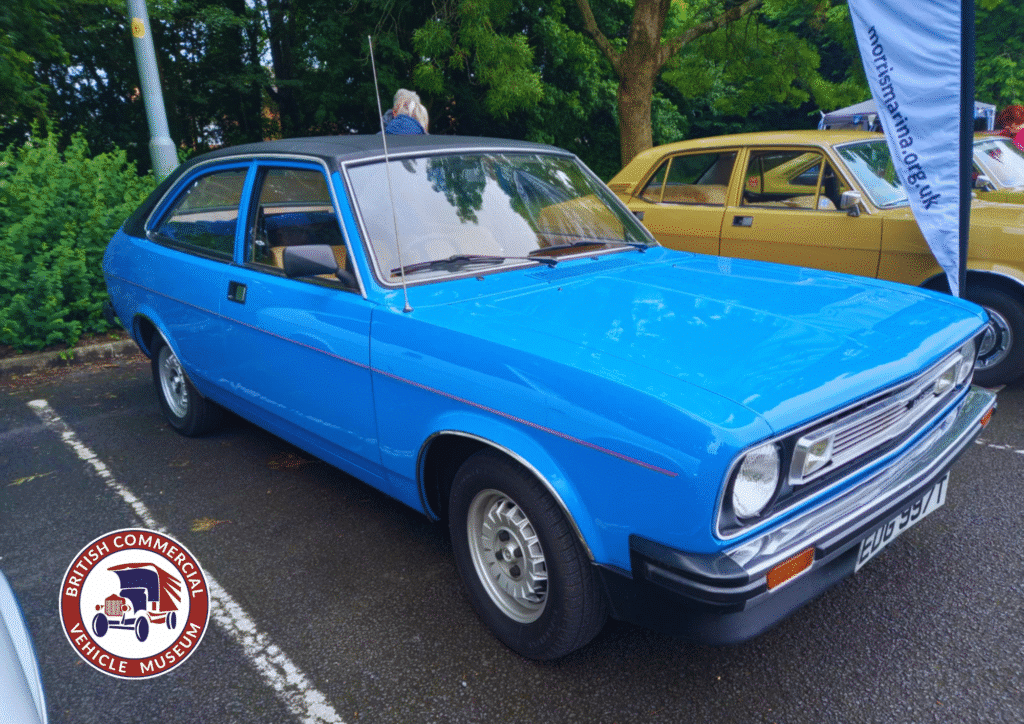
Last weekend we had the pleasure of being joined by a selection of Morris vehicles including Morris Marinas and Morris Minors to celebrate the 40th anniversary of the Morris Marina Owners Club.
A big thank you to everyone who came down to the Museum for the event, it was a pleasure to meet you all and to see all of your marvellous Morris cars.

The Morris Marina Story…
Project ADO16
Following the merge of British Leyland (BL) and British Motor Holdings (BMH) in January 1968, it became apparent to board members over at BL that once the Austin Maxi and the Mini Clubman had launched there were no plans to produce a car of substantial importance. With decreasing production numbers in the Austin-Morris range, a solution was needed, which came in the form of the BMC ADO16 (BMC 1100/1300).
The BMC AD016 was the best-selling car in Britain between 1963 and 1966, and later from 1968 to 1971. Although the car proved extremely popular with motorists, fleet buyers and organisations who purchased numerous vehicles in one go did not share the same sentiment, with many preferring the Ford Cortina. This was partly due to the Cortina’s affordability, simplistic design, practicality and the company’s reputation for reliability.
An idea blooms…
A BMC alternative to the Cortina was required… and it was required ASAP.
Continued high sales performance of the BMC 1100/1300 provided board members with ample time to develop a plan on how to compete with the Cortina. As a result of this project ADO28 (the code name given to the Morris Marina) was established, with Harry Webster taking point and being tasked with rejuvenating the Austin-Morris range of vehicles. Webster decided that components from the Morris Minor ought to be utilised for the project, encapsulated in a whole new body.
Initial ideas for the Morris Marina involved a requirement for a 10-inch stretch of wheelbase and an engine range of 1100cc, 1300cc and 1500cc. The opportunity for a company car-friendly package could be developed.
Webster and his team were under immense pressure to develop the Marina; with British Leyland’s Managing Director Donald Stokes pushing for the car to be unveiled at the 1970 Earls Court Motor Show. Due to tight time constraints, production of the ADO28 was heavily reliant on the BL parts-bin.
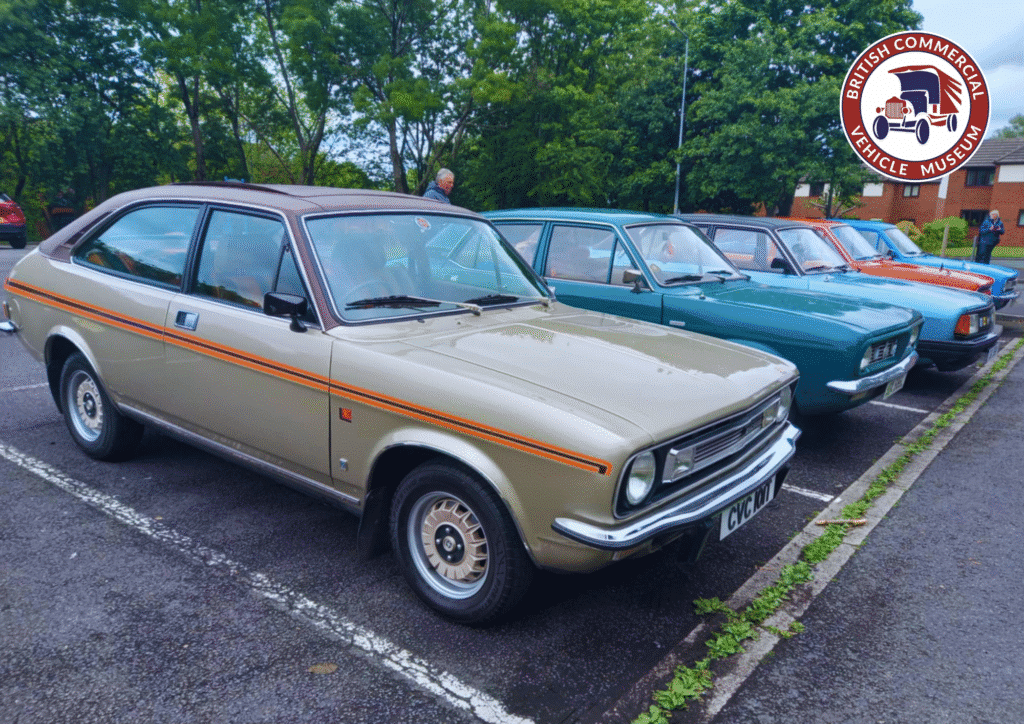

There were still many kinks that needed straightening out with the Marina – the Minor formed the basis of BL’s new car.
One issue encountered by Webster’s team was that the Morris Minor’s gearbox lacked synchromesh on first gear, careful costing analysis ensued with one potential option involving redesigning the gear box, whilst the other option involved utilising a Triumph 1300 unit. Ultimately the Triumph unit was selected to resolve this problem. Subsequently, the issue of production capabilities over at the Longbridge site arose, redevelopment at the works would be required to meet production requirements.
Further complications arose due to:
- The age of the donor car – made securing various components difficult
- A decrease in demand for the Morris Minor – the site at Cowley had been repurposed, meaning it wasn’t viable to complete production here
- Modifications were made to the ADO28’s brakes and front suspension – the lever-arm damper arrangement from the Minor wasn’t overly suitable and was expensive to build
Beyond Aesthetics: Why Style Is Essential…
July 1968 saw Webster enlist the help of Roy Haynes to brand the Marina, in particular reviewing the style of the vehicle and working on the packaging and branding of the car.
In order to achieve maximum desirability, the Morris Marina ought to be slightly larger than its competitors on the market (in order to appear as if motorists were receiving more for their money) but still fit with trends of the time and incorporate design elements favoured by consumers.
Originally, it was planned that the ADO28 only be manufactured during the 1976/1977 season, thus precautionary measures and long term solutions to secure the Marina for the future took a back seat.
Talking about seats… Haynes believed that a two-door version of the model would prove popular, aiming to market this particular design at under 35s. It was decided that this model would have a coupe-style body giving it a more ‘sporty’ feel.
Dedicated to developing two varying versions of the Marina, Haynes worked quickly to produce his first models, one available with a saloon body and one with a coupe. These were presented to the Executive Policy Committee at British Leyland, along with models produced by their competitors… Haynes’s ideas were approved with notes on modifications that the committee would like to make.
Production Begins In Oxford…
With the ADO28 being branded as a Morris vehicle, manufacturing was to take place at their Cowley site. Their current production line working to build the Morris Minor was ill equipped for what BL had planned for the manufacturing of the Marina, the sheer volume of ADO28s to be built would cripple the plant as it was – as a result the factory would receive £40m as part of an investment programme.
Bodies were assembled at Pressed Steel Fisher’s (PSF) Cowley site, the body shop was located half a mile away from the main factory with car bodies being transported over a bridge connecting the two plants. This proved to be exceedingly beneficial financially, as BL no longer required the bodies to be delivered from Swindon.
Originally the plan was to sell the Morris Marina for £575, however as the project progressed it became apparent that this would no longer be viable for British Leyland if they wished to make a profit. In addition to the Marina no longer being as affordable to consumers as first thought, the company were notified that Ford hoped to launch the new model of their Cortina (the Mk3) the same year.
Further complications arose in that the Mk3 Cortina would be much larger than the Mk2, which was a key design feature of the Marina. On top of this market research showed an increase in demand for cars with a 1.2ltr or 2.0ltr engine – both of which were beyond the capabilities of ADO28!
Executives persevered, electing to provide a larger selection of engines to be fitted in the Marina. Costs kept climbing…
And eventually concerns were raised on the financial viability of the project – from the get go a budget for production had not been set and members of the project-planning department were not 100% sure on whether the Marina would in fact make any profit at all if it were to be sold for the proposed price of £575.
To combat rising fears that the car become undesirable through a price increase, George Turnbull instructed that costly elements of the project be changed. – However, the situation was much worse than initially thought. The year was now 1969 and it was believed that even if the Marina be sold at a starting price of £580, a loss would be suffered on every car sold. It was decided that the vehicle be sold for £620 in order to attain a reasonable profit. This would put the Marina on par with the Cortina price wise.
Further costs were cut, with a cost-reduction programme presiding over production.
February 1969 saw Haynes resign from British Leyland, he was succeeded by Harris Mann as senior stylist. Six years later when commenting on the ADO28 Mann explained ‘We created it as a nice easy step into the market place – nothing that would offend, something simple and honest, something that would sell straight away. I think it was successful in doing what it was planned for’.
Christening the Cowley Cortina…
Production was now coming along nicely (even though there were still some lingering queries regarding cost) and focus shifted to the marketing of the vehicle.
Harry Webster wished to name the vehicle with a model number but the majority of the big players at BL favoured christening the model with a name. Proposed names included; the Morris Monaco, the Morris Machete, the Morris Mamba, the Morris Maori, the Morris Matelo and the Morris Musketeer.
Short listed for the chance to be cemented in Morris history were…
- Morris Major
- Morris Mirage
- Morris Marina
- Morris Mistral
And thus, the Marina was born.
Towards the end of 1969 the decision was made that the different variations of the model be launched simultaneously.
Original plans for a number of engines to choose from were down sized but to compensate a wider range of trims were made available for buyers to choose from. – This meant that British Leyland had an alternative to EVERY model of the Cortina.
The Marina was the perfect model to allow for a seamless transition from the ADO16 to the Princess, which was in the works.
The Final Stages of Project ADO28…
By the Spring of 1970 pre-production prototypes of the Marina were out and about on the roads of Britain and by December of that year, ADO28s were coming off the production line.
In terms of profit… due to the scaling back on the available engine range the profit on the Marina ranked at £30 – £40 higher than the ADO16 (the Austin 1100s and the Morris 1100s) during its launch period. British Leyland were optimistic about the cars success and eagerly anticipated its unveiling at Cannes in 1971.
Colloquially, known as the Cowley Cortina, the Morris Marina was the first new model to be produced by BL following their merge with BMH. This little car certainly has character, a compelling story and a number of interesting people were involved in bringing it into fruition.